Driving Perfomance

Automotive Software

Courses

1. AUTOSAR Development & Integration

Course Overview

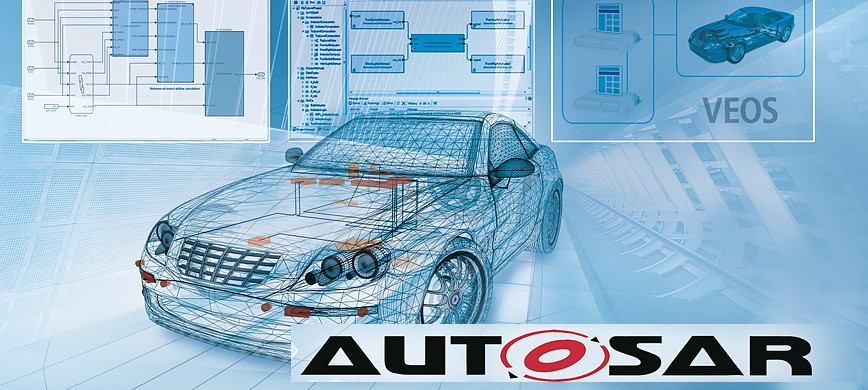
This course covers Classic AUTOSAR and Adaptive AUTOSAR architecture, ECU software stack, BSW configuration, RTE generation, and application development. It prepares engineers for ECU software development, vehicle architecture integration, and automotive software validation.

Course Syllabus

Module 1: Introduction to AUTOSAR Architecture

  • Classic vs Adaptive AUTOSAR
  • AUTOSAR methodology

Module 2: Basic Software (BSW) Stack

  • Microcontroller Abstraction Layer
  • ECU Abstraction Layer
  • Services Layer

Module 3: ECU Configuration Tools

  • Vector DaVinci Configurator
  • EB Tresos
  • AUTOSAR XML (ARXML)

Module 4: RTE (Runtime Environment)

  • RTE generation & integration
  • Interfaces, ports, SWCs

Module 5: AUTOSAR Application Layer

  • CDD development
  • Complex Device Drivers
  • Diagnostic event management (DEM)
  • Communication services (CAN, LIN, FlexRay, Ethernet)

Module 6: Adaptive AUTOSAR Concepts

  • POSIX OS
  • Middleware
  • SOME/IP

Module 7: Integration & Testing

  • ECU integration workflow
  • AUTOSAR compliance testing

Module 8: Project: Configure and Deploy AUTOSAR SWCs

Outcomes
  • Ability to develop and integrate AUTOSAR SWCs
  • Hands-on skills in tools like DaVinci and Tresos
  • Strong understanding of BSW, RTE, and ECU architecture
  • Job readiness for AUTOSAR developer, integrator, or validation engineer roles

2. Embedded Software for Automotive Systems

Course Overview

A full program on automotive embedded systems covering microcontrollers, real-time programming, AUTOSAR-oriented development, communication protocols, diagnostics, and safety-critical coding techniques.

Course Syllabus

Module 1: Fundamentals of Embedded Systems

  • Microcontrollers, ECUs
  • Memory architecture

Module 2: C Programming for Automotive

  • MISRA C
  • Low-level driver development

Module 3: RTOS Concepts

  • Task scheduling
  • Interrupt management
  • FreeRTOS basics

Module 4: Automotive Communication Protocols

  • CAN, LIN, FlexRay
  • UDS diagnostics
  • Automotive Ethernet

Module 5: Bootloaders & Flash Programming
Module 6: Sensor & Actuator Interfaces
Module 7: Functional Safety Concepts (Introduction)
Module 8: Testing & Validation

  • HIL testing basics
  • SIL/MIL testing

Module 9: Project: Develop a Safety-Critical Embedded ECU Module
Outcomes
  • Proficiency in embedded C for automotive applications
  • Ability to work with microcontrollers, sensors, and actuators
  • Understanding of diagnostics and communication protocols
  • Job readiness for embedded software engineer roles in automotive companies

3. Functional Safety (ISO 26262) Implementation

Course Overview

A specialized program covering the complete ISO 26262 safety lifecycle, including HARA, ASIL determination, safety goals, hardware/software safety requirements, validation, and development of safety cases.

Course Syllabus

Module 1: Introduction to Functional Safety

  • ISO 26262 framework
  • Safety lifecycle

Module 2: Hazard Analysis & Risk Assessment (HARA)

  • ASIL levels
  • Safety goals

Module 3: System Level Safety

  • Technical safety requirements
  • Safety architecture

Module 4: Hardware Safety

  • FMEDA
  • Fault metrics
  • Diagnostic coverage

Module 5: Software Safety

  • Safety mechanisms
  • Freedom from interference
  • V model implementation

Module 6: Verification & Validation

  • Testing techniques
  • Safety compliance

Module 7: Safety Culture, Documentation & Safety Case
Module 8: Project: ASIL Analysis & Safety Documentation

Outcomes
  • Ability to participate in ISO 26262-compliant development
  • Strong understanding of safety analysis (HARA, FTA, FMEDA)
  • Capability to develop and review safety documentation
  • Prepared for roles such as Functional Safety Engineer, Safety Analyst, and Compliance Engineer

4. Cybersecurity for Connected Cars

Course Overview

This course focuses on securing modern connected vehicles by covering automotive cybersecurity frameworks, network protection, cryptography, secure ECU design, and compliance with global automotive cybersecurity standards.

Course Syllabus

Module 1: Introduction to Automotive Cybersecurity

  • Threat landscape
  • Attack surfaces in vehicles

Module 2: Automotive Networks

  • CAN, LIN, FlexRay
  • Ethernet vulnerabilities

Module 3: Security Standards

  • ISO/SAE 21434
  • UNECE WP.29
  • TARA (Threat Analysis & Risk Assessment)

Module 4: Cryptographic Methods

  • Secure communication
  • Key management

Module 5: Secure ECU Development

  • Secure boot
  • Secure diagnostics
  • Intrusion detection systems

Module 6: Vehicle-to-Everything (V2X) Security
Module 7: Penetration Testing & Tools
Module 8: Project: End-to-End Secure Vehicle Architecture

Outcomes
  • Ability to identify and secure vehicle attack surfaces
  • Understanding of automotive cybersecurity standards and compliance
  • Competency in secure ECU architecture and communication protocols
  • Prepared for cybersecurity engineer roles in automotive, EV, and connected vehicle domains